
Why Internal Fraud Is a Silent Threat to Nigerian Businesses
For many Nigerian business owners, fraud is something they associate with outsiders: hackers, scammers, or fake vendors. In reality, one of the biggest financial risks businesses face comes from within. Internal fraud quietly drains revenue, damages trust, and can cripple a company long before the owner realizes what is happening. How do you prevent internal fraud in your business?
From inflated expenses and fake receipts to unauthorized withdrawals and manipulated records, internal fraud thrives in environments where controls are weak and visibility is low. Unfortunately, many small and medium-sized businesses in Nigeria still rely on manual processes, informal approvals, and fragmented financial records. These gaps make it difficult to track who did what, when, and why.
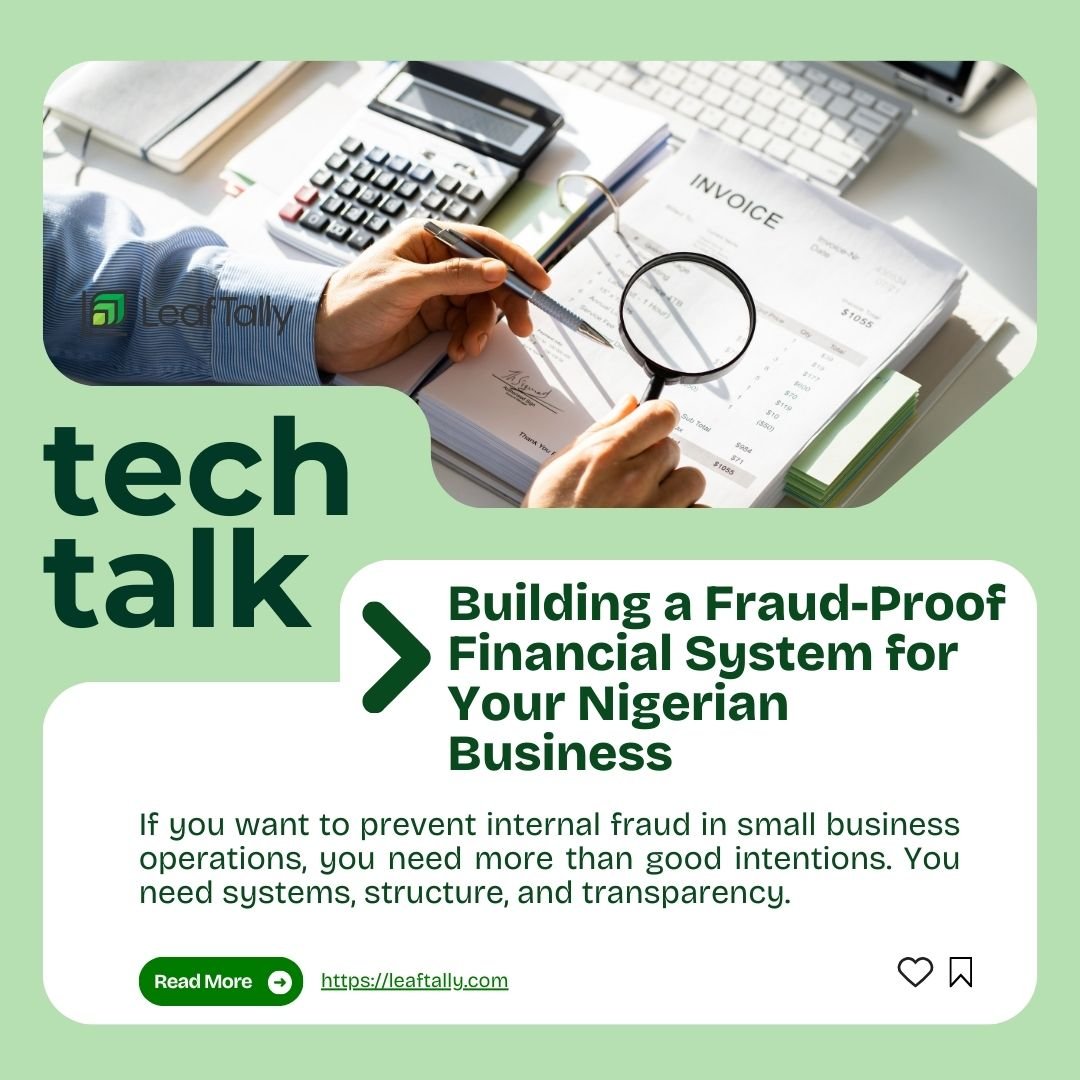
If you want to prevent internal fraud in small business operations, you need more than good intentions. You need systems, structure, and transparency. This article explains what internal fraud looks like in Nigerian businesses, why it happens, and how to build a fraud-proof financial system that protects your money, your people, and your future. It also shows how tools like Leaftally support stronger controls without slowing your business down.
Understanding Internal Fraud in Nigerian Businesses
Internal fraud refers to dishonest or illegal activities carried out by employees, partners, or trusted associates for personal gain. Unlike external fraud, it often goes unnoticed for long periods because it is hidden behind familiarity and trust.
Common examples include:
- Cash skimming before transactions are recorded
- Falsifying expense claims
- Creating fake suppliers or ghost workers
- Altering financial records to hide theft
- Unauthorized use of company funds
For Nigerian SMEs, internal fraud is especially dangerous because margins are often thin, and losses can quickly threaten survival. This is why business owners who want to prevent internal fraud in small business environments must take a proactive approach.
Why Internal Fraud Happens So Easily
Internal fraud is rarely about bad people alone. It often emerges from weak systems.
Key contributing factors include:
- Manual bookkeeping and spreadsheets
- Lack of segregation of duties
- Poor oversight and delayed reporting
- Overreliance on trust instead of controls
- Limited use of technology
When financial processes are unclear or undocumented, it becomes easy for fraudulent activity to blend into normal operations. To prevent internal fraud in small business settings, the focus must be on building systems that reduce opportunity, not just reacting after losses occur.
The Real Cost of Internal Fraud
The financial loss from fraud is only part of the damage. Internal fraud also leads to:
- Loss of trust between owners and staff
- Poor decision-making based on false data
- Regulatory and tax risks
- Emotional stress and distraction
Many Nigerian business owners discover fraud only when cash flow problems become severe. At that point, recovery is much harder. Building a fraud-proof system early is far less costly than fixing the damage later.
The Foundation of a Fraud-Proof Financial System
To prevent internal fraud in small business operations, your financial system must be built on three pillars:
- Transparency
- Accountability
- Consistency
These pillars ensure that transactions are visible, responsibilities are clear, and processes are followed the same way every time.
Let us explore how to put these principles into practice.
Step One: Separate Financial Responsibilities
One of the most effective ways to reduce fraud is segregation of duties. This means no single person should control an entire financial process from start to finish.
For example:
- The person who approves payments should not be the same person who records them
- The person who handles cash should not reconcile the bank statement
- The person who manages payroll should not authorize salary changes alone
Even in small teams, partial separation is possible. If you want to prevent internal fraud in small business environments, start by mapping who does what and identifying overlaps that create risk.
Step Two: Document and Standardize Processes
Fraud thrives in ambiguity. When processes are undocumented, people create their own shortcuts.
Clear financial procedures should cover:
- Expense approvals
- Payment authorization
- Inventory handling
- Payroll processing
- Reporting timelines
Documented processes make it easier to spot unusual behavior and harder for fraud to hide. They also protect honest employees by providing clarity and structure.
Step Three: Maintain Real-Time Financial Visibility
Delayed or incomplete financial information creates blind spots. Many Nigerian businesses review their finances monthly or even quarterly, which gives fraud time to grow unnoticed.
Real-time visibility allows you to:
- Spot irregular transactions early
- Monitor trends and anomalies
- Ask questions before losses escalate
If your goal is to prevent internal fraud in small business operations, you must be able to see what is happening financially without delay.
This is where modern accounting platforms make a significant difference.
Step Four: Control Access to Financial Information
Not everyone in your business needs access to everything. One common mistake is giving full access to financial records because it feels easier.
A fraud-proof system uses role-based access:
- Staff see only what they need to perform their duties
- Sensitive actions require approval
- Changes are logged and traceable
Controlled access limits the ability to manipulate records and creates accountability. It also provides audit trails that are essential for investigations and compliance.
Step Five: Reconcile and Review Regularly
Regular reconciliation is one of the simplest yet most powerful fraud prevention tools. Bank reconciliations, inventory checks, and payroll reviews help ensure records match reality.
When reconciliations are delayed or skipped, discrepancies accumulate. To prevent internal fraud in small business operations, reconciliations should be routine, not occasional.
The Role of Technology in Fraud Prevention
Manual systems make fraud easier to hide and harder to detect. Technology does not eliminate fraud risk, but it significantly reduces opportunity.
Modern financial systems help by:
- Automating calculations
- Creating audit trails
- Enforcing approval workflows
- Providing real-time reporting
Leaftally is designed with these controls in mind. It supports Nigerian businesses by centralizing financial data, improving visibility, and reinforcing accountability across teams.
For business owners looking to prevent internal fraud in small business settings, technology becomes a partner in protection, not just a bookkeeping tool..
Why Small Businesses Are Not “Too Small” for Fraud
A dangerous myth among Nigerian SMEs is that fraud only happens in large organizations. In reality, small businesses are often more vulnerable because controls are weaker and trust is informal.
Fraudsters target environments where detection is unlikely. This makes proactive prevention essential, regardless of business size.
How Leaftally Supports Fraud-Proof Financial Systems
Leaftally helps Nigerian businesses strengthen their financial controls without adding unnecessary complexity. By organizing data, supporting approvals, and improving visibility, it reduces opportunities for internal fraud.
For owners who want peace of mind, Leaftally provides structure that supports growth while protecting assets. It allows you to focus on running your business, knowing your financial system is working in your favor.
Preventing Fraud While Scaling Your Business
As your business grows, fraud risk increases. More transactions, more staff, and more complexity create new opportunities for abuse.
A scalable financial system ensures controls grow with the business. This is why investing early to prevent internal fraud in small business operations is a strategic decision, not just a defensive one.
Conclusion
Internal fraud is one of the most damaging yet preventable risks facing Nigerian businesses. It thrives in silence, weak systems, and delayed oversight. The good news is that with the right structure, controls, and tools, it can be significantly reduced.
If you want to prevent internal fraud in small business operations, focus on transparency, accountability, and consistency. Separate duties, document processes, monitor finances regularly, and leverage technology that supports control rather than chaos.
If you are ready to strengthen your financial system and protect your business from internal fraud, explore how Leaftally can help. Visit https://leaftally.com/ to see how a modern, transparent accounting platform supports control, clarity, and confidence for Nigerian business owners.
Fraud prevention is not about distrust. It is about building a system that protects everyone involved and allows your business to grow safely.